
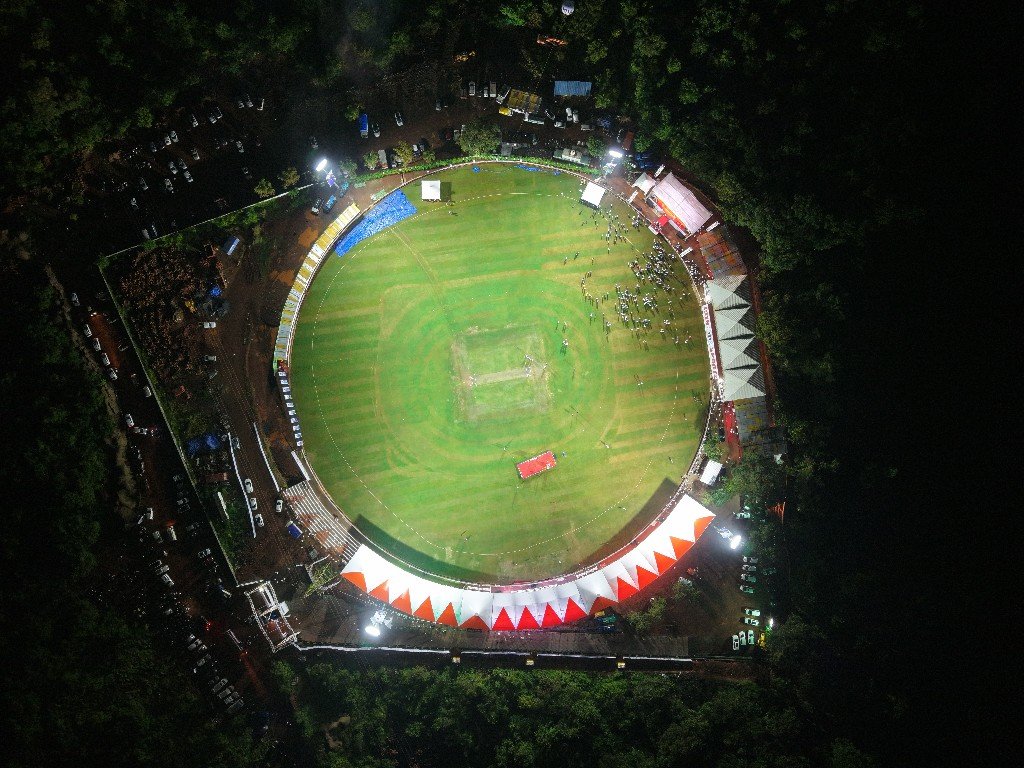
High-quality turf cricket depends on disciplined ground programmes—not last-minute heroics. At 1919 Sportz we combine agronomy basics with match-week staging so both league fixtures and training blocks receive fair access to a safe surface.
What “pitch rest” really means
Rest is not idle time; it is when soil breathes, grass repairs, and compaction evens out. During dense tournament stacks, certain strips may be rotated while others recover. Clubs should expect temporary redirects of net traffic—communicated through the club dashboard and mirrored on the blog when many teams are affected.
Outfield and boundary integrity
The circular outfield you see in aerial gallery frames is maintained for consistent pick-up, lighting uniformity, and athlete sightlines. Casual foot traffic on the rope during events is managed by ushers; training groups must stay within agreed zones in their venue booking paperwork.
Floodlights and dew management
Night cricket introduces dew curves that change ball behaviour. Ground staff coordinate with match officials on mopping, ball changes, and break timing. Organisers planning broadcast or cinematic shoots should disclose equipment weight and cable runs up front via contact so we protect both turf and truss paths described under facilities.
How to read official notices
Priority order: dashboard message (clubs) → blog article (broad) → email follow-up when contractual. If you are not yet approved on the club portal, watch the public blog and submit questions through contact rather than assuming legacy WhatsApp threads are authoritative.
Planning around maintenance windows
If you are scheduling a multi-week academy camp, build at least one flex day for weather or recovery. Link your travel plans to hub pages such as Margao cricket ground comparisons only for logistics—your playing venue remains Verna IDC as per about.